
How Nuvolos Equips Bioinformatics for the Cloud

Introduction
In bioinformatics, cloud computing has become indispensable for advanced scientific research. But while its potential is no longer denied by anyone, making practical use of it is not yet smooth sailing. In this article, we discuss how Nuvolos empowers bioinformatics by making it easier and more accessible to use advanced bioinformatics software that depends on cloud computing. In this way, Nuvolos helps close the attainability gap: the gap between the potential of the cloud for bioinformatics and the reality that still falls well short of seamless deployment.
Why cloud computing is essential for bioinformatics
In our previous post on why computational biology needs cloud computing, we showed how unlocking the power of the cloud is taking bioinformatics and related fields to the next level. To recap that discussion, there are several ways the cloud can empower - and indeed is already empowering - bioinformatics:
- Large server arrays and data centres make high performance computing (HPC) more available than ever, providing a useful level of compute power that is not as expensive and inaccessible as supercomputing but that still has the capability required to run advanced simulations and do number crunching on large volumes of data;
- Cloud computing is indispensable to the computational and infrastructural requirements of AI/ML, which is becoming a staple of cutting-edge research techniques;
- The cloud even helps with supporting reproducibility in science, as it can potentially make the sharing and publishing of code, databases, libraries, and dependencies easier for the benefit of referees and colleagues at other institutions;
- And last but not least, easier operation of bioinformatics software: for example in building pipelines covering multiple applications for enrichment, analysis, or visualisation, or for improving project management and collaboration.
Defining the barriers to entry
We know, however, that in practice things are often not so simple. It is one thing to know the potential of the cloud, but it is quite another thing to be able to practically and smoothly obtain the benefits in a way that is useful and accessible to the typical researcher in bioinformatics, medicine, and similar fields. The key problem here is the barriers to entry.
Far too often, effective use of HPC technology or cloud computing requires researchers to invest substantial time and effort teaching themselves new programming languages, network setup and management, software architecting, and many more skills that more properly belong to computer science than to doing biomedical research. Certainly, most researchers - especially in bioinformatics - are more than capable of learning these skills when this is necessary to keep their research viable technologies on which cutting-edge science depends. But the question is: should you really have to? All the time spent learning skills and techniques just to be able to use cloud computing infrastructure is time not spent on achieving results in your field - whether it's omics or forensics.
In other words, the potential of the cloud - from HPC and deep learning to cloud-based bioinformatics software and improved forms of collaboration - is one thing. The practical utility and accessibility of the cloud is another. The difference between this potential and the reality is the attainability gap: the difficulty of making the most of what modern bioinformatics software and their supporting cloud infrastructure can offer.
How Nuvolos bridges the attainability gap: AlphaFold2 and RFDiffusion
Nuvolos is designed to bridge that attainability gap. As the leading computational workspace in the cloud, Nuvolos empowers bioinformatics by making even advanced software tools and the compute resources needed to run them accessible and easy to manage. The complexity of the data pipeline or software stack is no limitation. Neither is the working environment: you can run your stack in your preferred environment directly in the browser. We will illustrate the practical benefits using some of the most cutting-edge tools in bioinformatics today: the proteomics deep learning-based applications AlphaFold2 and RFDiffusion.
For those not familiar, AlphaFold2 is the most advanced version of a neural network-based tool for predicting protein shapes. Developed by DeepMind (now a part of the tech consortium Google), it has enabled huge breakthroughs in the protein folding problem, one of the core challenges of proteomics. AlphaFold several times won the protein structure prediction competition CASP (AlphaFold in 2018 and AlphaFold2 in 2020), and after having been released as an open source tool in 2021, it has formed the basis of subsequent CASP-winning approaches as well.
A full pipeline for biomedical application can use AlphaFold2 to deduce - given certain constraints - the shape of proteins on the basis of a particular amino acid sequence taken from empirical investigation. This protein shape will inform the researcher of essential properties of the protein. Knowing these, one can then de novo design new binder proteins that would bind with that protein structure, using RFDiffusion, the most state-of-the-art tool for protein design. In essence, both AlphaFold2 and RFDiffusion are two complementary state-of-the-art AI tools in proteomics.
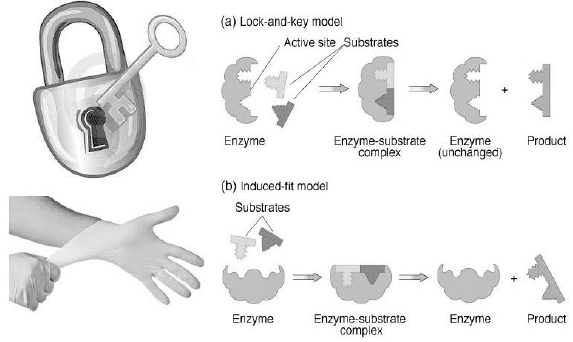
Jointly, they form a very potent but also very complex pipeline for new advances in proteomics, matching the 'key' (the binding protein) to the 'lock' (the deduced protein geometric structure). But because these tools are so complex and advanced, it is far from a trivial task for a researcher, or even a team of researchers, to set up and configure them in the best way to connect them to the power of cloud computing - without which the voluminous computations needed for the tools' neural network operations will not function. Here Nuvolos comes to the rescue.
In Nuvolos, both applications are available as out-of-the-box tools that you can plug and play into your workflow. All the software and its dependencies (data and software) are already pre-installed, so you can focus on obtaining and interpreting results. Naturally, AlphaFold2 and RFDiffusion can also be organised into a pipeline or combined with other toolkits, without being limited to Python.
One of the biggest factors adding complexity is having to context switch between the different steps in your pipeline. Nuvolos stands out not just in availability - you get the resources when you need them - but also the fact that you don't need to switch contexts. With Nuvolos, you can run AlphaFold2, RFDiffusion and any other tools on the same platform. As an integral solution, we cover the entire computational track of your bioinformatics or biotech project in one place.
Conclusion: Nuvolos makes the cloud science ready
To sum up, Nuvolos offers bioinformatics a unified framework for research:
- All the power of the cloud at your fingertips;
- Leading software tools, such as AlphaFold2 and RFDiffusion, available in familiar working environments without needing to learn new skills or contexts;
- Guaranteed ease of use on research pipelines without context switching, saving on time and complexity;
- Plus integrated project management and collaboration tools, budgeting support, easy one-click sharing and distribution of data, code, and files, and much more.
Nuvolos brings the cloud to you, removing technical and practical barriers to unlocking its potential for scientific discovery, and letting you focus on results instead of on network engineering and hardware troubleshooting. Our goal is to make the infrastructure of science simple, so that you can do the science - we do the rest.
Interested in trying it out? Give our free trial a spin or book a demo with our dedicated Sales team.